Welcome to your safe space
Support
You do not have to navigate scoliosis alone.
Living with scoliosis is a unique journey, but you never have to walk it alone. Discover facts, tips for daily life in the Philippines, and a community that empowers you.
Understanding Scoliosis
Scoliosis is a condition in which the spine curves sideways and also rotates, creating a three-dimensional change in the shape of the spine. From behind, a typical spine appears relatively straight, while a scoliotic spine may form a C-shaped or S-shaped curve.
A spinal curve is generally classified as scoliosis when the Cobb angle measures more than 10 degrees on an X-ray.
Scoliosis can affect children, teenagers, and adults. In adolescents, the most common form is adolescent idiopathic scoliosis (AIS), meaning that no specific cause has been identified.
What Is Scoliosis?
Think of the spine as a column of bones called vertebrae.
A healthy spine naturally has gentle curves when viewed from the side. When viewed from the back, however, it is generally straight.
With scoliosis, the spine develops an abnormal sideways curve and may rotate.
The visible appearance can vary considerably from person to person. Some curves are difficult to see, especially when they are mild.
Important to know
Scoliosis is not simply the result of “bad posture.” In adolescent idiopathic scoliosis, the cause is not fully understood. Researchers believe that multiple factors, including genetic and biological factors, may contribute.
What Are the Signs of Scoliosis?
Scoliosis does not always cause obvious symptoms. Mild scoliosis may have no pain or noticeable symptoms at all.
Possible signs include:
- One shoulder appearing higher than the other
- One shoulder blade becoming more prominent
- Uneven hips or waist
- The body appearing to lean to one side
- Clothes appearing to fit unevenly
- One side of the rib cage appearing more prominent
- A noticeable rib prominence when bending forward
The Adam’s Forward Bend Test
During a forward-bend examination, a person bends forward while a healthcare professional looks for asymmetry in the back and rib cage.
A difference in the height or prominence of one side of the back may be a sign that further assessment is needed.
Important: The forward-bend test can help identify possible scoliosis, but it does not by itself diagnose scoliosis.
Does scoliosis always cause pain?
Not necessarily.
Many children and teenagers with mild scoliosis do not experience significant pain. Back pain can occur, particularly in adults or in some people with more severe curves, but pain should not automatically be assumed to be caused by scoliosis.
How Is Scoliosis Diagnosed?
A healthcare professional usually begins with a medical history and physical examination.
They may examine:
- Posture and body alignment
- Shoulder and hip symmetry
- The back while standing
- The spine during forward bending
- Possible neurological findings
A scoliometer may sometimes be used during a physical examination to estimate trunk rotation.
X-ray: The Key Diagnostic Tool
When scoliosis is suspected, an X-ray is commonly used to evaluate and measure the spinal curve.
The curve is measured using the Cobb method, producing a measurement in degrees called the Cobb angle. A curve greater than 10 degrees is generally considered scoliosis.
Diagnosis pathway
Possible signs noticed
↓
Clinical examination
↓
X-ray when indicated
↓
Cobb angle and curve assessment
↓
Diagnosis and individualized management plan
A physical screening test alone should not be treated as a definitive diagnosis.
What Are the Different Types of Scoliosis?
Scoliosis has several possible causes and classifications.
Adolescent Idiopathic Scoliosis
This is the most common type of scoliosis in children and teenagers. “Idiopathic” means that a specific cause has not been identified.
Early-Onset Scoliosis
This refers to scoliosis that develops before adolescence, including forms identified in infancy or childhood. Some cases are idiopathic, while others have an underlying cause.
Congenital Scoliosis
This occurs because the vertebrae develop abnormally before birth.
Neuromuscular Scoliosis
This type is associated with conditions affecting the nervous system or muscles, which can affect spinal balance and control.
Adult or Degenerative Scoliosis
Scoliosis can also be present or become clinically significant in adulthood. In some adults, spinal degeneration and other age-related changes can contribute to a new or worsening curve.
How Is Scoliosis Treated?
Not everyone with scoliosis needs active treatment.
Treatment depends on factors such as:
- Age
- Growth remaining
- Size and location of the curve
- Whether the curve is changing over time
- Symptoms
- The underlying cause of the scoliosis
Observation
For some people, especially those with milder curves, the healthcare team may recommend regular monitoring rather than immediate treatment.
The purpose is to watch for changes as the person grows or as the condition changes over time.
Bracing
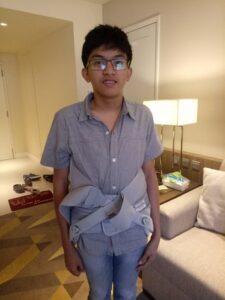
For some growing children and adolescents with curves at risk of progressing, a back brace may be prescribed.
The goal of bracing is generally to slow or stop further progression of the curve while the child is still growing.
Physical Therapy and Scoliosis-Specific Exercise
Physical therapy may be included in an individualized treatment plan. Scoliosis-specific exercise approaches may be used by appropriately trained physical therapists.
Exercise can also support general physical fitness, strength, mobility, and quality of life. Treatment should be tailored to the person’s specific condition rather than based on generic online exercises.
Surgery
For selected patients with more significant or progressive curves, surgery may be considered.
The type of surgery and decision to operate depend on factors such as the size and pattern of the curve, age, growth, progression, symptoms, and overall clinical circumstances. Spinal fusion is one surgical procedure used to correct and stabilize certain curves.
When Should Scoliosis Be Assessed
If you notice possible signs of scoliosis in yourself or your child, seek assessment from a qualified healthcare professional.
A healthcare professional can determine whether an abnormal spinal curve is actually present, assess its severity and cause, and recommend appropriate monitoring or treatment when necessary.
For children and adolescents, evaluation may involve a pediatrician, orthopedic surgeon, or other appropriately qualified healthcare professional. Physical therapists may also be part of the multidisciplinary care team.
Remember
You do not have to figure out your diagnosis from a photo or screening test alone.
A visible asymmetry can have different causes, and a forward-bend test cannot replace professional assessment and appropriate imaging.
See a qualified healthcare professional when scoliosis is suspected.
Concerned about scoliosis? Don't self-diagnose. Get assessed by a qualified healthcare professional right now before it's too late!
Patient Stories
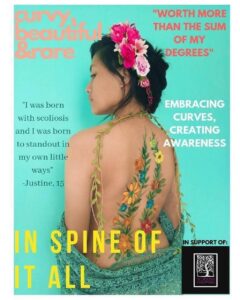
Stories of Strength: Inspiring Scoliosis Warriors share their journeys.
If you want to be featured and inspire others in our community, we’d love to hear from you. 

Please email us at hello@scoliosisphilippines.org to share your story.
Your experience may bring hope, encouragement, and strength to someone who needs it today.
Parents Speak Up
Watch Patient Stories
Dresfie
Grace
Ashley
Jonaliza
Read Patient Stories






Medical Disclaimer: Scoliosis Philippines provides information, navigation, and community support. We do not replace professional medical advice, diagnosis, or treatment.